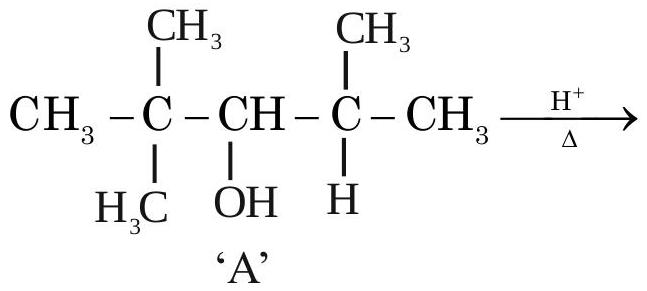
The total number of possible products formed by tertiary carbocation of A is ______.
Answer: 4
Solution
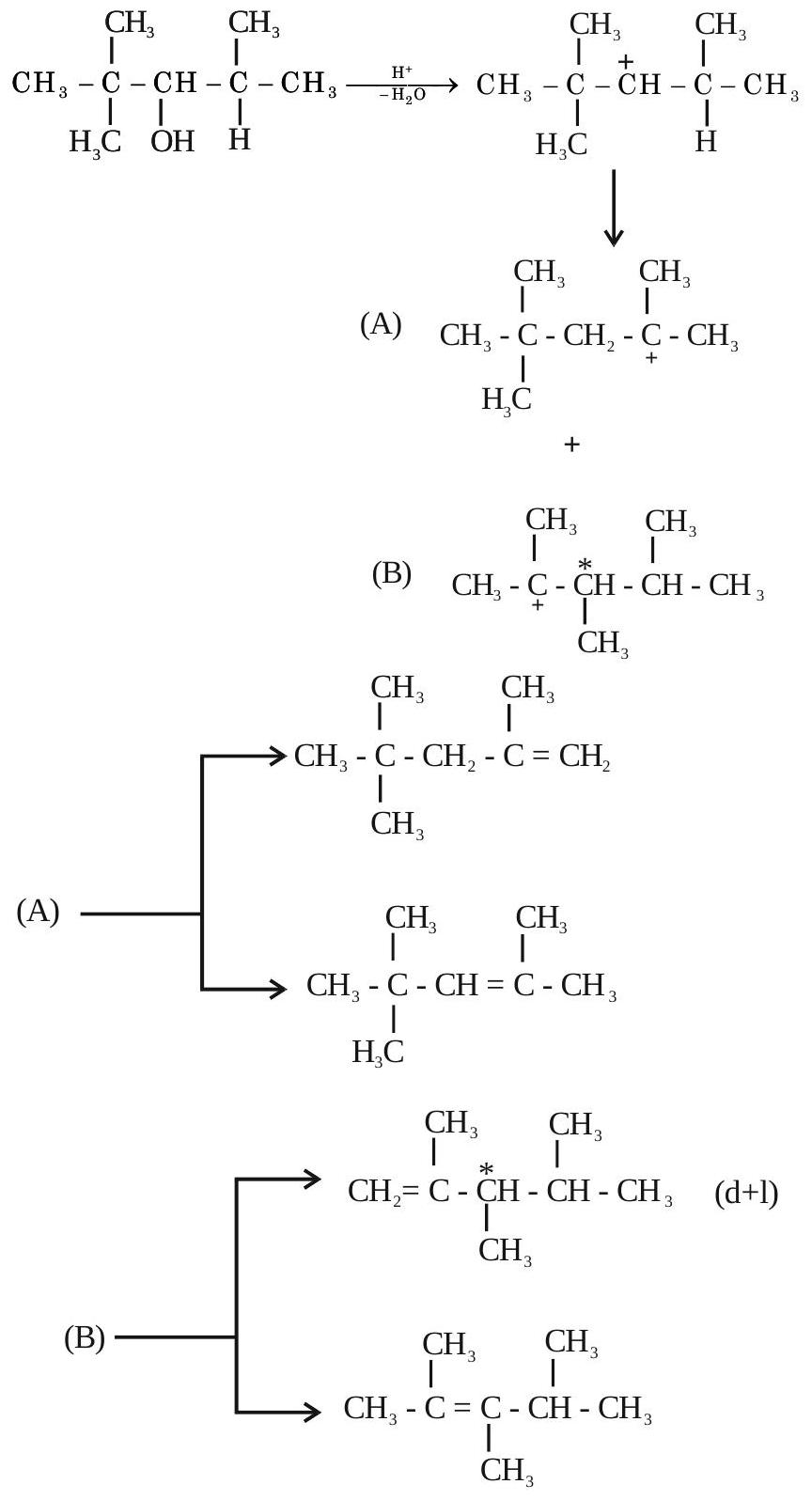
Protonation and loss of water from the alcohol first give a secondary carbocation. A 1,2-hydride shift turns it into one tertiary carbocation, while a 1,2-methyl shift turns it into a second tertiary carbocation. Each of these tertiary carbocations can lose a β-proton in two distinct directions, so each yields two alkenes. Counting the constitutionally different alkenes obtained from the two tertiary carbocations, the total number of products formed is four.