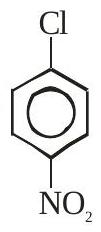
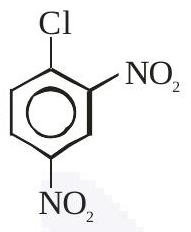
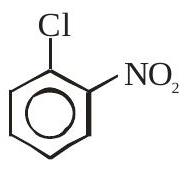
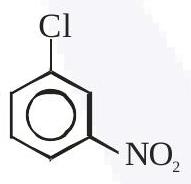
The compound which will have the lowest rate towards nucleophilic aromatic substitution on treatment with OH− is
(A)(see structure)
(B)(see structure)
(C)(see structure)
(D)(see structure)✓ Correct
Answer: (D)
Solution
In nucleophilic aromatic substitution the hydroxide ion adds to the ring carbon carrying chlorine and generates a Meisenheimer intermediate whose negative charge must be delocalised onto a nitro group for the reaction to move forward. A nitro group placed ortho or para to the chlorine accepts this charge directly through resonance, so the ortho, para and 2,4-dinitro substituted chlorobenzenes react readily. When the lone nitro group lies meta to the chlorine the developing negative charge cannot reach it, the intermediate is left poorly stabilised, and the substitution becomes extremely sluggish. The slowest hydroxide-promoted substitution is therefore shown by meta-nitrochlorobenzene.
JEE Main · 2023 · 25 Jan 2023 · Shift 1 · Single correct option