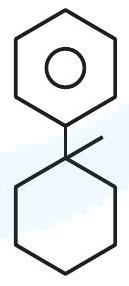
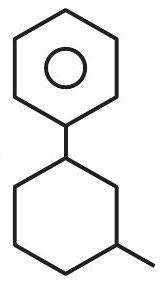
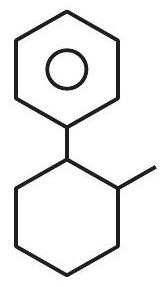
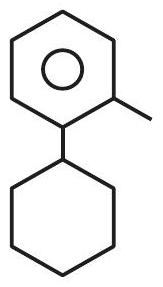
The substrate is the epoxide of 1-phenylcyclohexene, in which one of the two oxirane carbons also carries the phenyl group. Under the acidic conditions supplied by hydrogen fluoride the ring oxygen is first protonated, and the carbon–oxygen bond that breaks is the one giving the more stable cation. Cleavage at the fully substituted benzylic carbon generates a tertiary benzylic carbocation stabilised by the aromatic ring, while the oxygen is retained as a hydroxyl on the neighbouring carbon. Fluoride then adds to this benzylic centre, so fluorine and the phenyl group come to lie on the same carbon with the hydroxyl on the adjacent carbon. The major product is 1-fluoro-1-phenylcyclohexan-2-ol, bearing fluorine and phenyl geminal to each other.
JEE Main · 2023 · 01 Feb 2023 · Shift 2 · Single correct option