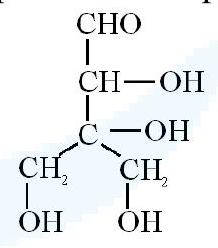
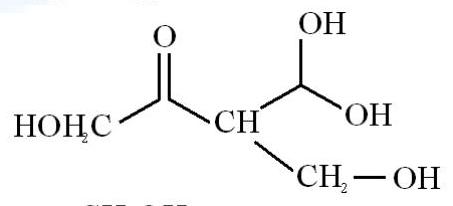
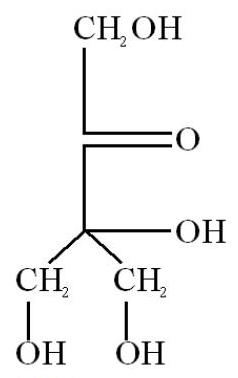
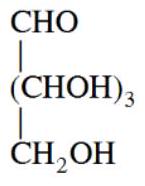
Compound A, C5H10O5, given a tetraacetate with Ac2O and oxidation of A with Br2−H2O gives an acid, C5H10O6. Reduction of A with HI gives isopentane. The possible structure of A is :
(A)(see structure)✓ Correct
(B)(see structure)
(C)(see structure)
(D)(see structure)
Answer: (A)
Solution
Formation of a tetra-acetate shows that compound A carries four hydroxyl groups, and oxidation by bromine water to C5H10O6, a gain of one oxygen, shows a terminal aldehyde being raised to a carboxylic acid, so A is an aldopentose. Reduction with hydriodic acid stripping away every oxygen leaves isopentane, which fixes a branched, 2-methylbutane carbon framework rather than a straight chain. The structure meeting all three requirements is the branched-chain aldopentose whose five carbons form the isopentane skeleton with the aldehyde at one end and hydroxyl groups on the remaining carbons.
JEE Main · 2023 · 31 Jan 2023 · Shift 2 · Single correct option