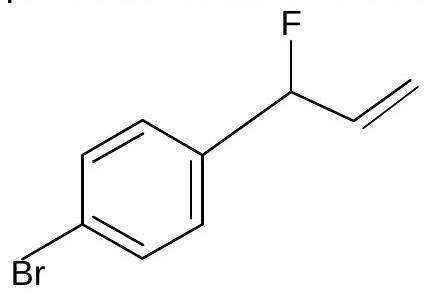
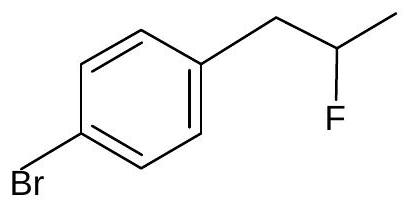
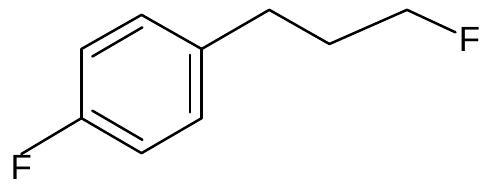
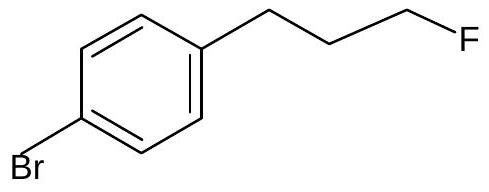
Benzoyl peroxide starts a radical chain, so hydrogen bromide adds to the terminal double bond against Markovnikov's rule. A bromine atom attaches to the end carbon because the radical left behind is then secondary and better stabilised, and abstraction of hydrogen from HBr completes the addition to give 1-bromo-4-(3-bromopropyl)benzene. Cobalt(II) fluoride is a Swarts reagent and exchanges fluorine for the halogen of an alkyl chain; the aryl bromide survives, because its carbon-halogen bond has partial double bond character and does not undergo this substitution. The major product is 1-bromo-4-(3-fluoropropyl)benzene.
JEE Main · 2021 · 20 Jul 2021 · Shift 2 · Single correct option