JEE Main · 2019 · 09 Apr 2019 · Shift 2 · Haloalkanes and Haloarenes

WhatsApp Email
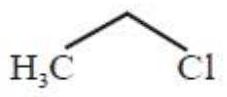
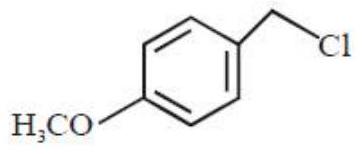
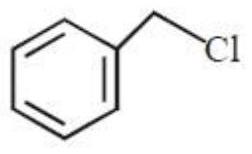
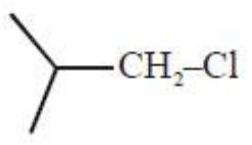
Increasing order of reactivity of the following compounds for substitution is:
Structure a
a
Structure b
b
Structure c
c
Structure d
d
  1. (A)(b) (c) (d) (a)
  2. (B)(a) (b) (d) (c)
  3. (C)(b) (a) (d) (c)✓ Correct
  4. (D)(b) (c) (a) (d)

Answer: (C)

Solution

Reactivity toward substitution follows the stability of the carbocation each substrate can form. The primary halide (b) gives the least stable cation and so reacts slowest. The secondary halide (a) comes next. The benzyl halide (d) forms a resonance-stabilised benzylic cation, which is more stable still, and the p-methoxybenzyl halide (c) is best of all because the electron-donating feeds extra electron density into the benzylic cation by resonance. The increasing order is therefore (b) < (a) < (d) < (c).

JEE Main · 2019 · 09 Apr 2019 · Shift 2 · Single correct option
More JEE Main questions on Haloalkanes and Haloarenes

  1. The correct order of reactivity of in methanol with the following nucleophiles is and
    JEE Main 2026View solution →
  2. The correct order of the rate of reaction of the following reactants with nucleophile by mechanism is :
    (Given : Structure I and II are rigid)
    JEE Main 2026View solution →
  3. The correct order of reactivity of the following benzyl halides towards reaction with KCN is:
    JEE Main 2026View solution →
  4. The correct order of the rate of the reaction for the following reaction with respect to nucleophiles is:
    JEE Main 2026View solution →
  5. Given below are four compounds:
    (a) n-propyl chloride
    (b) iso-propyl chloride
    (c) sec-butyl chloride
    (d) neo-pentyl chloride

    Percentage of carbon in the one which exhibits optical isomerism is:
    JEE Main 2026View solution →
  6. Consider the following reaction :


    The product Y formed is :
    JEE Main 2026View solution →