Match the compounds in List-I with the appropriate observations in List-II and choose the correct option.
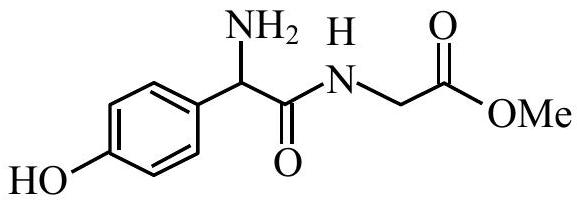
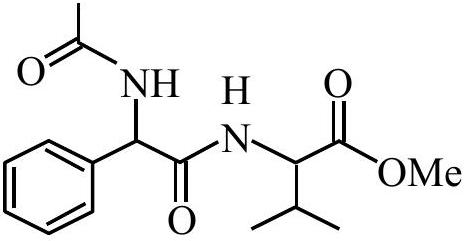
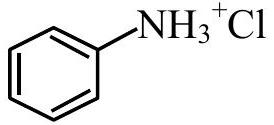
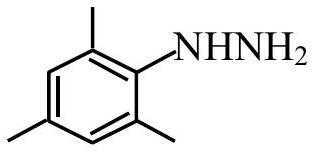
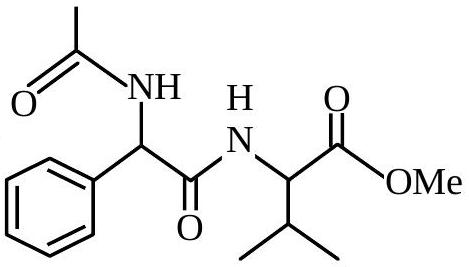
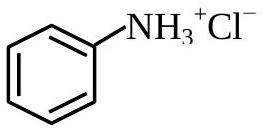
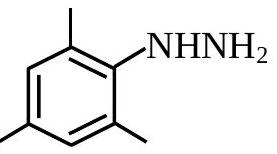
List-I (P) (see structure) (Q) (see structure) (R) (see structure) (S) (see structure)
List-II (1) Reaction with phenyl diazonium salt gives yellow dye. (2) Reaction with ninhydrin gives purple color and it also reacts with FeCl3 to give violet color. (3) Reaction with glucose will give corresponding hydrazone. (4) Lassiagne extract of the compound treated with dilute HCl followed by addition of aqueous FeCl3 gives blood red color. (5) After complete hydrolysis, it will give ninhydrin test and it DOES NOT give positive phthalein dye test.PQRS
(A)P→1;Q→5;R→4;S→2
(B)P→2;Q→5;R→1;S→3✓ Correct
(C)P→5;Q→2;R→1;S→4
(D)P→2;Q→1;R→5;S→3
Answer: (B)
Solution
Matching compounds with observations:
(P) Contains both phenolic -OH and amino acid functionality → gives ninhydrin test (purple) and FeCl3 test (violet) → (2)
(Q) A dipeptide → upon hydrolysis gives amino acids that give ninhydrin test but no phthalein dye test (no phenolic group) → (5)
(R) Phenylhydrazinium chloride → reacts with phenyl diazonium salt to give yellow azo dye → (1)
(S) An aromatic hydrazine derivative → reacts with glucose (aldehyde) to form hydrazone → (3)
Therefore, P→2; Q→5; R→1; S→3
JEE Advanced · 2025 · 18 May 2025 · Paper 1 · Single correct option