The complete hydrolysis of , and , respectively, gives
- (A), and ✓ Correct
- (B), and
- (C), and
- (D), and
Answer: (A)
Solution
The complete hydrolysis of interhalogen compounds follows the pattern:
ICl + H₂O: The iodine is oxidized to IO⁻ (hypoiodate) and chlorine is reduced to Cl⁻.
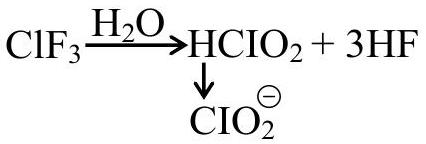
ClF₃ + H₂O: Chlorine is oxidized to ClO₂⁻ (chlorite) and fluorine forms HF.
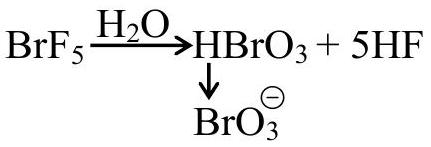
BrF₅ + H₂O: Bromine is oxidized to BrO₃⁻ (bromate) and fluorine forms HF.
In each case, the less electronegative halogen is oxidized while the more electronegative one (or fluorine) is reduced or forms HF.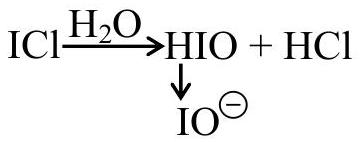
ICl + H₂O: The iodine is oxidized to IO⁻ (hypoiodate) and chlorine is reduced to Cl⁻.
ClF₃ + H₂O: Chlorine is oxidized to ClO₂⁻ (chlorite) and fluorine forms HF.
BrF₅ + H₂O: Bromine is oxidized to BrO₃⁻ (bromate) and fluorine forms HF.
In each case, the less electronegative halogen is oxidized while the more electronegative one (or fluorine) is reduced or forms HF.
JEE Advanced · 2025 · 18 May 2025 · Paper 2 · Single correct option