Considering the reaction sequence given below, the correct statement(s) is(are)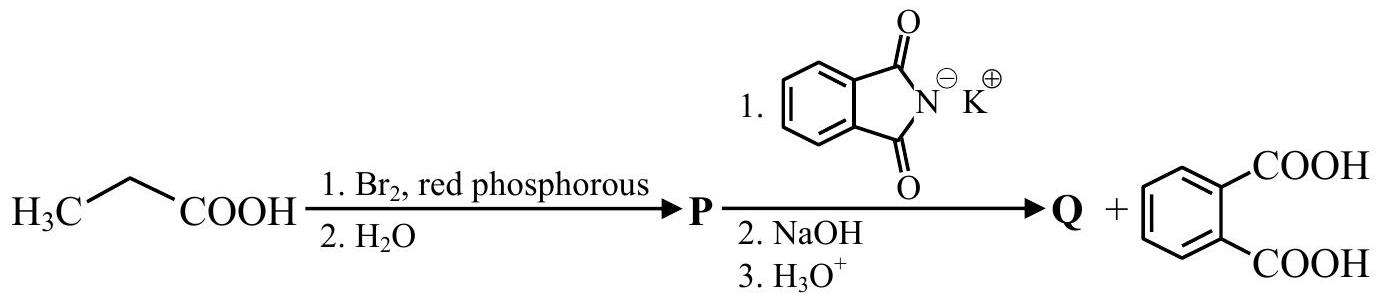
- (A)P can be reduced to a primary alcohol using .
- (B)Treating P with conc. solution followed by acidification gives Q.✓ Correct
- (C)Treating with a solution of in aq. HCl liberates .✓ Correct
- (D) is more acidic than .✓ Correct
Answer: (B), (C), (D)
Solution
From the reaction sequence, is benzoic acid and is aniline.
(A) Benzoic acid () cannot be reduced to a primary alcohol using as does not reduce carboxylic acids. Incorrect.
(B) Treating benzoic acid with conc. followed by heating gives benzamide, which on Hofmann degradation gives aniline (). Correct.
(C) Treating aniline () with in aq. HCl forms benzenediazonium chloride, which can decompose to liberate . Correct.
(D) Benzoic acid is more acidic than propanoic acid due to the electron-withdrawing effect of the benzene ring. Correct.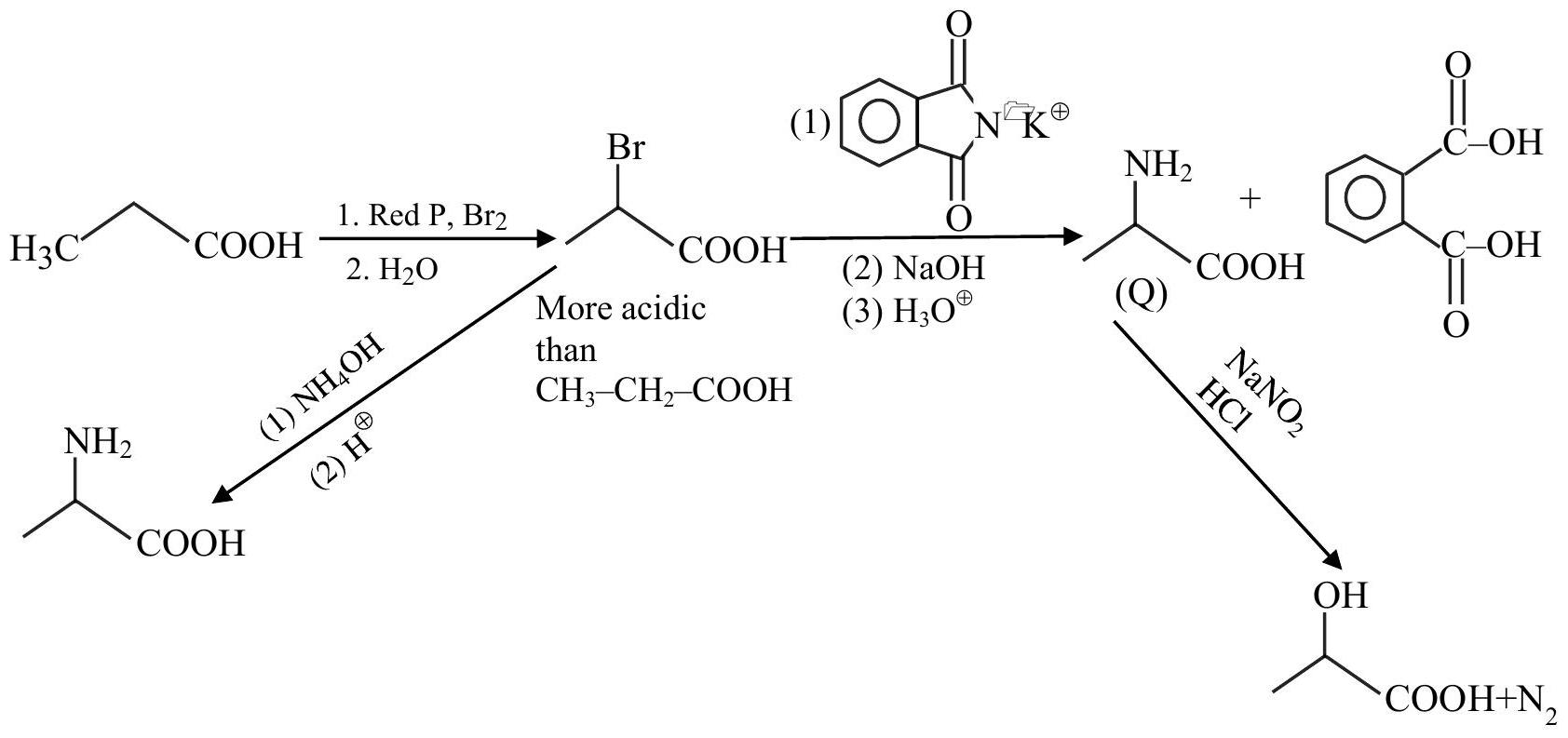
(A) Benzoic acid () cannot be reduced to a primary alcohol using as does not reduce carboxylic acids. Incorrect.
(B) Treating benzoic acid with conc. followed by heating gives benzamide, which on Hofmann degradation gives aniline (). Correct.
(C) Treating aniline () with in aq. HCl forms benzenediazonium chloride, which can decompose to liberate . Correct.
(D) Benzoic acid is more acidic than propanoic acid due to the electron-withdrawing effect of the benzene ring. Correct.
JEE Advanced · 2022 · 28 Aug 2022 · Paper 1 · One or more correct options