Match the compounds in LIST-I with the observation in LIST-II, and choose the correct option.
| LIST-I | LIST-II |
|---|---|
| (I) Aniline | (P) Sodium fusion extract of the compound on boiling with , followed by acidification with conc. , gives Prussian blue color. |
| (II) o-Cresol | (Q) Sodium fusion extract of the compound on treatment with sodium nitroprusside gives blood red color. |
| (III) Cysteine | (R) Addition of the compound to a saturated solution of results in effervescence. |
| (IV) Coprolactam | (S) The compound reacts with bromine water to give a white precipitate. |
| (T) Treating the compound with neutral solution produces violet color. |
- (A)I → P, Q; II → S; III → Q, R; IV → P
- (B)I → P; II → R, S; III → R; IV → Q, S
- (C)I → Q, S; II → P, T; III → P; IV → S
- (D)I → P, S; II → T; III → Q, R; IV → P✓ Correct
Answer: (D)
Solution
Matching each compound with observations:
(I) Aniline ():
(II) o-Cresol (methylphenol):
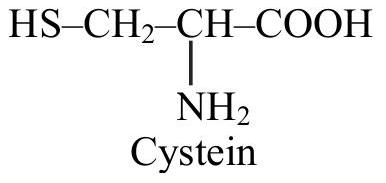
(III) Cysteine (amino acid with -SH group):
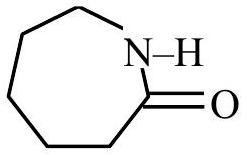
(IV) Caprolactam (cyclic amide):
Therefore, option (D): I → P, S; II → T; III → Q, R; IV → P is correct.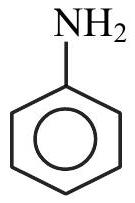
(I) Aniline ():
- Contains nitrogen → gives Prussian blue in Lassaigne's test (P)
- Reacts with bromine water to give white precipitate of 2,4,6-tribromoaniline (S)
(II) o-Cresol (methylphenol):
- Phenolic OH gives violet color with neutral (T)
(III) Cysteine (amino acid with -SH group):
- Contains sulfur → gives blood red color with sodium nitroprusside (Q)
- Carboxylic acid group reacts with to give effervescence (R)
(IV) Caprolactam (cyclic amide):
- Contains nitrogen → gives Prussian blue in Lassaigne's test (P)
Therefore, option (D): I → P, S; II → T; III → Q, R; IV → P is correct.
JEE Advanced · 2022 · 28 Aug 2022 · Paper 1 · Single correct option