JEE Advanced · 2014 · 25 May 2014 · Paper 1 · General Organic Chemistry

WhatsApp Email
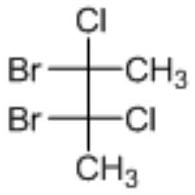
The total number(s) of stable conformers with non-zero dipole moment for the following compound is (are)

Answer: 3

Solution

The compound is 2,3-dichloro-2,3-dibromobutane: .

This molecule has a C-C single bond allowing rotation. We analyze the staggered conformers (most stable):

Newman projections looking down the C2-C3 bond:
  1. Anti conformer: Cl and Br on opposite carbons are staggered 180° apart. If the arrangement is asymmetric, dipole moment ≠ 0.
  2. Gauche conformers: Two gauche positions (±60°) with different spatial arrangements of Cl and Br.

For non-zero dipole moment, the conformer must be asymmetric (not have a plane or center of symmetry that cancels the dipole).

Systematic analysis of staggered conformers:
• Conformers with Cl-Cl, Br-Br, or Cl-Br eclipsing are unstable.
• Three distinct staggered conformers have non-zero dipole moments due to asymmetric arrangements.

Answer: 3

JEE Advanced · 2014 · 25 May 2014 · Paper 1 · Integer answer
More JEE Advanced questions on General Organic Chemistry

  1. Considering reduces an ester group to the corresponding alcohol and does not reduce a carboxylic acid group, the correct statement about the major products P, Q R and S is
    JEE Advanced 2026View solution →
  2. The number of isomeric tetraenes (NOT containing -hybridized carbon atoms) that can be formed from the following reaction sequence is ____.
    JEE Advanced 2022View solution →
  3. Among the following, the conformation that corresponds to the most stable conformation of meso-butane-2,3-diol is -
    JEE Advanced 2021View solution →
  4. Newman projections P, Q, R and S are shown below:

    Which one of the following options represents identical molecules?
    JEE Advanced 2020View solution →
  5. Which one of the following structures has the IUPAC name 3-ethynyl-2-hydroxy-4-methylhex-3-en-5-ynoic acid?
    JEE Advanced 2020View solution →
  6. With respect to the compounds I-V, choose the correct statement(s).
    JEE Advanced 2020View solution →