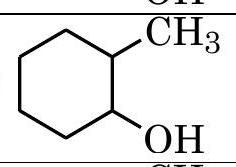
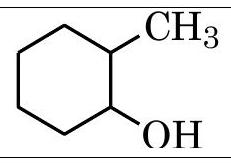
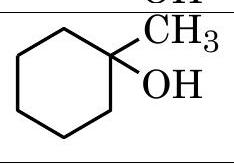
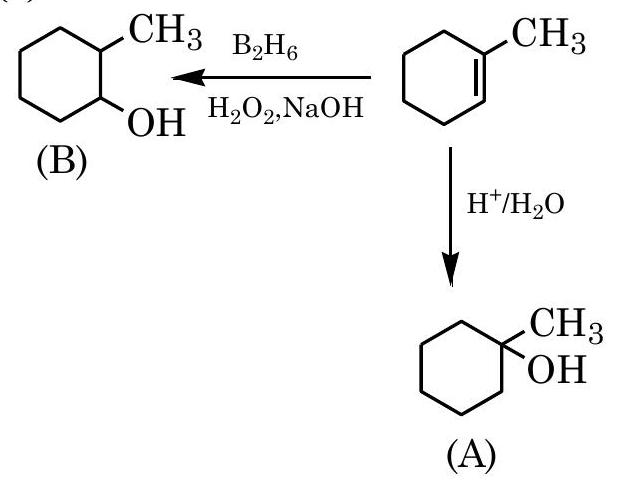
Product A and B formed in the following set of reactions are:
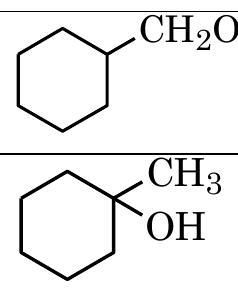
(A)A= (see structure) B= (see structure)AB
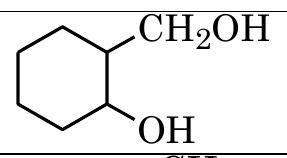
(B)A = B= (see structure)✓ Correct
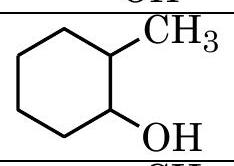
(C)A = (see structure) B= (see structure)AB
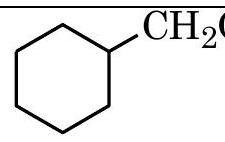
(D)A= (see structure) B= (see structure)AB
Answer: (B)
Solution
The alkene in this sequence is 1-methylcyclohex-1-ene, and the two reagent sets add water across the same double bond with opposite regiochemistry. Hydroboration–oxidation (B2H6 then H2O2/NaOH) proceeds through a concerted four-centred transition state in which boron bonds to the less hindered, less substituted alkene carbon with syn addition of H and B (anti-Markovnikov placement); oxidative workup replaces C–B with C–OH with retention of configuration, giving trans-2-methylcyclohexan-1-ol. Acid-catalysed hydration (H+/H2O) instead proceeds through the more stable tertiary carbocation formed on protonating the less substituted alkene carbon, so water is captured at the methyl-bearing carbon — Markovnikov addition — giving the tertiary alcohol 1-methylcyclohexan-1-ol. A is the Markovnikov product, 1-methylcyclohexan-1-ol, and B is the anti-Markovnikov hydroboration–oxidation product, trans-2-methylcyclohexan-1-ol.
JEE Main · 2024 · 30 Jan 2024 · Shift 2 · Single correct option