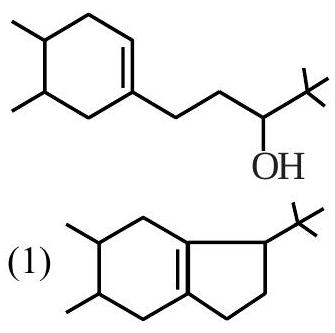
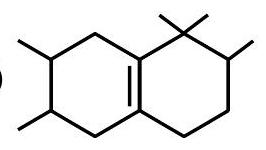
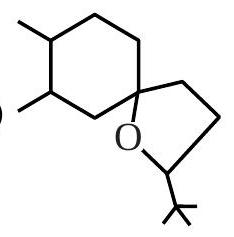
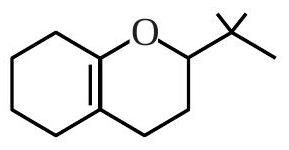
On treatment with acid the secondary alcohol is protonated and loses water to give a carbocation adjacent to the quaternary carbon of the tert-butyl group. Being a neopentyl-type cation, it relieves its instability by a 1,2-methyl shift that produces a more stable tertiary carbocation, and the ring double bond then closes onto this cation to form a six-membered ring fused to the original one. Loss of a proton from the resulting tertiary cation sets a double bond at the ring junction, so the major product is the methyl-substituted octahydronaphthalene.
JEE Main · 2023 · 06 Apr 2023 · Shift 2 · Single correct option