JEE Main · 2023 · 10 Apr 2023 · Shift 2 · Practical and Analytical Chemistry

WhatsApp Email
In Carius tube, an organic compound 'X' is treated with sodium peroxide to form a mineral acid 'Y'. The solution of is added to 'Y' to form a precipitate 'Z'. 'Z' is used for the quantitative estimation of an extra element. 'X' could be:
  1. (A)Cytosine
  2. (B)Chloroxylenol
  3. (C)A nucleotide
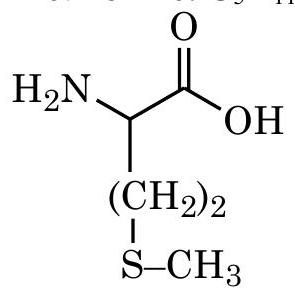
  4. (D)Methionine✓ Correct

Answer: (D)

Solution

The precipitate Z is , which forms when reacts with sulfuric acid (Y). This indicates that compound X contains sulfur. Among the options, only methionine () contains sulfur. When treated with sodium peroxide in a Carius tube, the sulfur is oxidized to sulfuric acid, which then precipitates as barium sulfate for quantitative estimation.

JEE Main · 2023 · 10 Apr 2023 · Shift 2 · Single correct option
More JEE Main questions on Practical and Analytical Chemistry

  1. Consider the following reactions.
    (Hot solution)
    …
    JEE Main 2026View solution →
  2. In Carius method, 0.75 g of an organic compound gave 1.2 g of barium sulphate, find percentage of sulphur (molar mass ). Molar mass of barium sulphate is .
    JEE Main 2026View solution →
  3. Sodium fusion extract of an organic compound (Y) with and chlorine water gives violet color to the layer. 0.15 g of gave 0.12 g of the silver halide precipitate in Carius method. Percentage of halogen in the compound …
    JEE Main 2026View solution →
  4. When 1 g of compound ( X ) is subjected to Kjeldahl's method for estimation of nitrogen, 15 was neutralized by ammonia evolved. The percentage of nitrogen in compound is :
    JEE Main 2026View solution →
  5. Identify the correct statements:
    A. Hydrated salts can be used as primary standard.
    B. Primary standard should not undergo any reaction with air.
    C. Reactions of primary standard with another substance should be instantaneous and stoichiometric.
    D. Primary standard should not be …
    JEE Main 2026View solution →
  6. Match List-I with List-II.

    List-I: Functional group (detection)
    (A) Unsaturation (Baeyer's test)
    (B) Alcoholic group (Ceric ammonium nitrate test)
    (C) Aldehyde group (Tollen's reagent)
    (D) Phenolic group ( test)

    List-II: Change observed during detection
    (I) Red co …
    JEE Main 2026View solution →