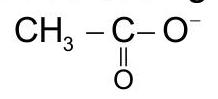
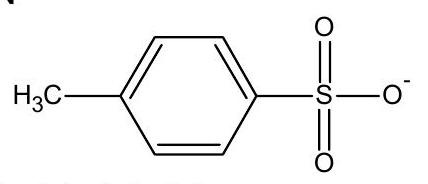
The decreasing order of nucleophilicity among the nucleophiles (a) (see structure) (b) CH3O− (c) CN− (d) (see structure)ad
(A)(a), (b), (c), (d)
(B)(d), (c), (b), (a)
(C)(b), (c), (a), (d)
(D)(c), (b), (a), (d)✓ Correct
Answer: (D)
Solution
Nucleophilicity here depends on how available and how localised the lone pair is. Cyanide leads the field because its charge sits on carbon, a less electronegative atom that holds its electrons loosely and offers them readily. Methoxide comes next, a strong base with its charge on a single oxygen; acetate is weaker because resonance smears its charge over two oxygens; and the sulphonate (tosylate) ion is the poorest, its negative charge spread thinly across the three oxygens of the −SOX3X− group and thus very reluctant to attack. The decreasing order runs cyanide, then methoxide, then acetate, then tosylate.
JEE Main · 2005 · 08 May 2005 · Offline · Single correct option