The reaction(s) leading to the formation of 1,3,5-trimethylbenzene is (are)
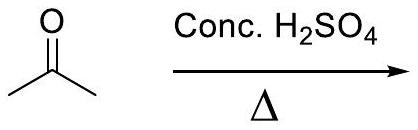
- (A)(see structure)
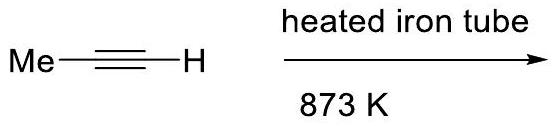
- (B)(see structure)
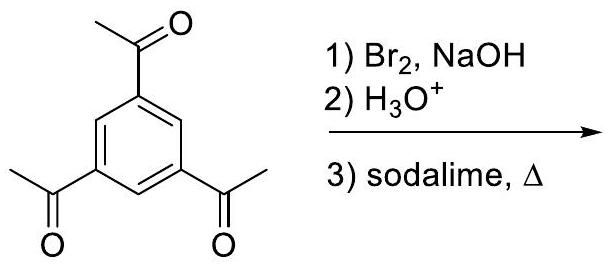
- (C)(see structure)
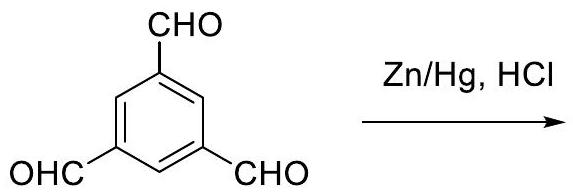
- (D)(see structure)
Answer: (A), (B), (D)
Solution
1,3,5-trimethylbenzene (mesitylene) can be formed through:
(A) Trimerization of propyne (methylacetylene) under acidic conditions forms mesitylene.
(B) Friedel-Crafts alkylation of benzene with propene in the presence of followed by further alkylation can lead to mesitylene.
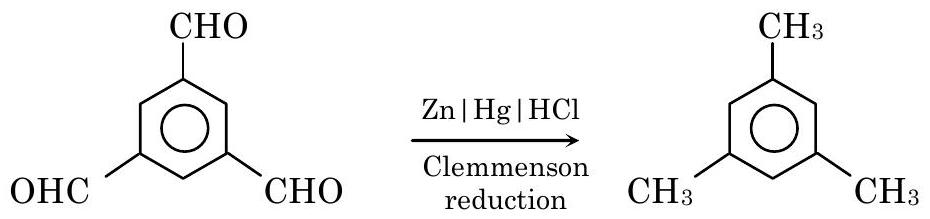
(C) This reaction does not lead to 1,3,5-trimethylbenzene.
(D) Cyclotrimerization of propyne or appropriate rearrangement reactions can produce mesitylene.
Correct answers: (A), (B), and (D).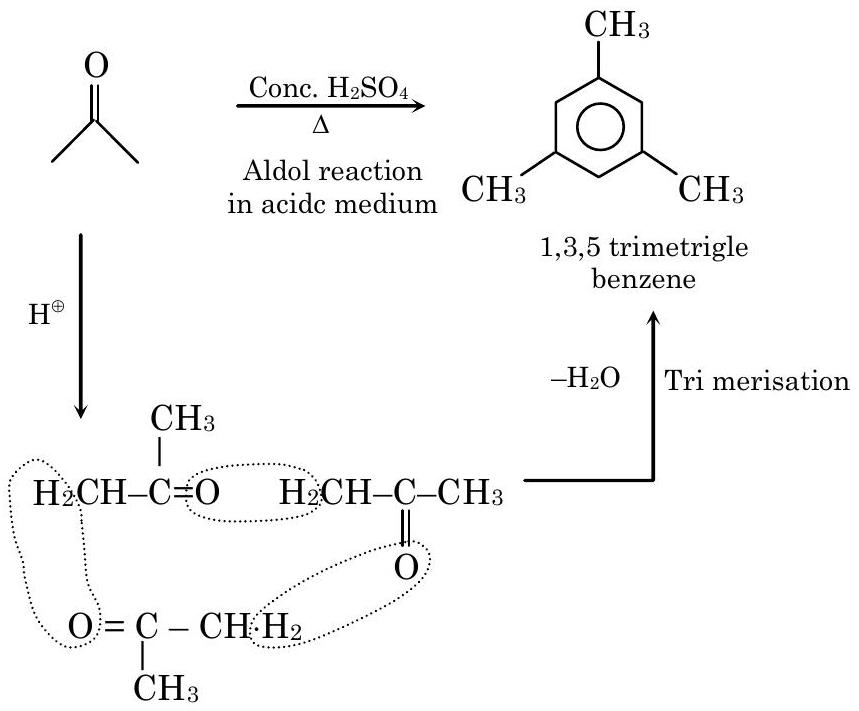
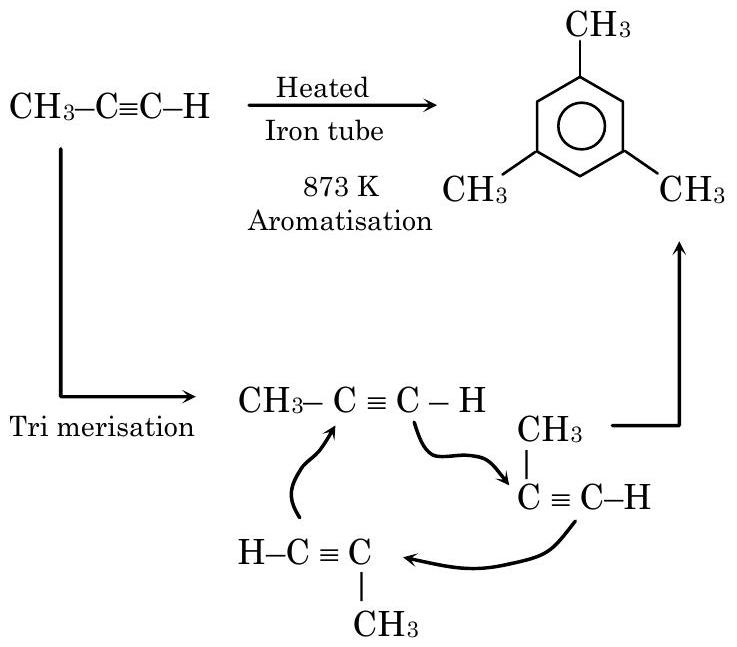

(A) Trimerization of propyne (methylacetylene) under acidic conditions forms mesitylene.
(B) Friedel-Crafts alkylation of benzene with propene in the presence of followed by further alkylation can lead to mesitylene.
(C) This reaction does not lead to 1,3,5-trimethylbenzene.
(D) Cyclotrimerization of propyne or appropriate rearrangement reactions can produce mesitylene.
Correct answers: (A), (B), and (D).
JEE Advanced · 2018 · 20 May 2018 · Paper 1 · One or more correct options