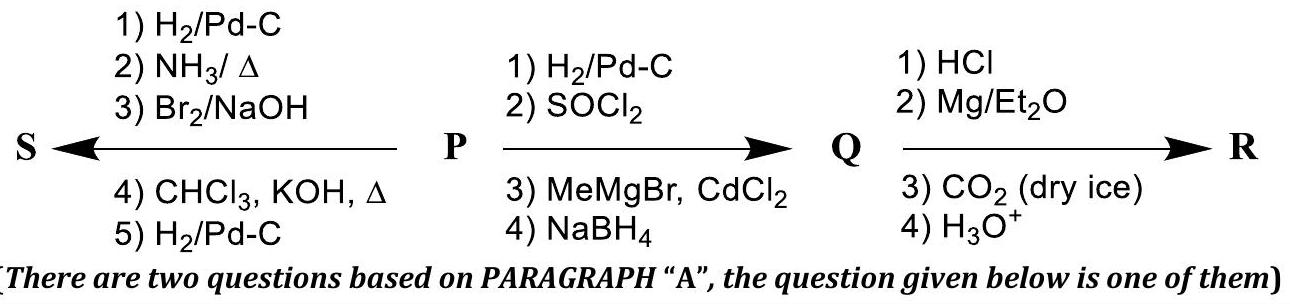
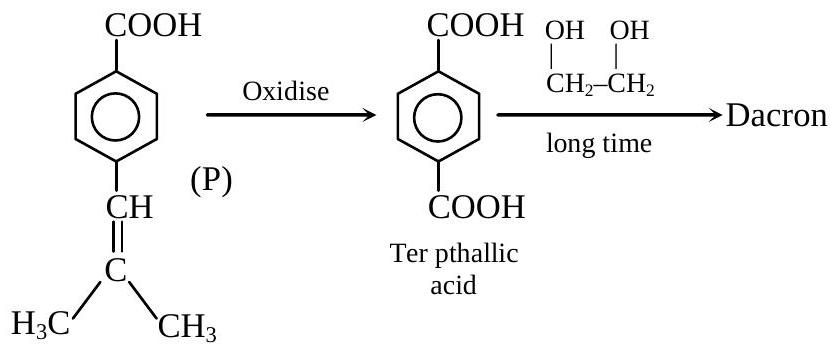
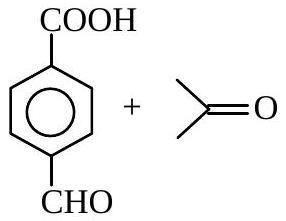
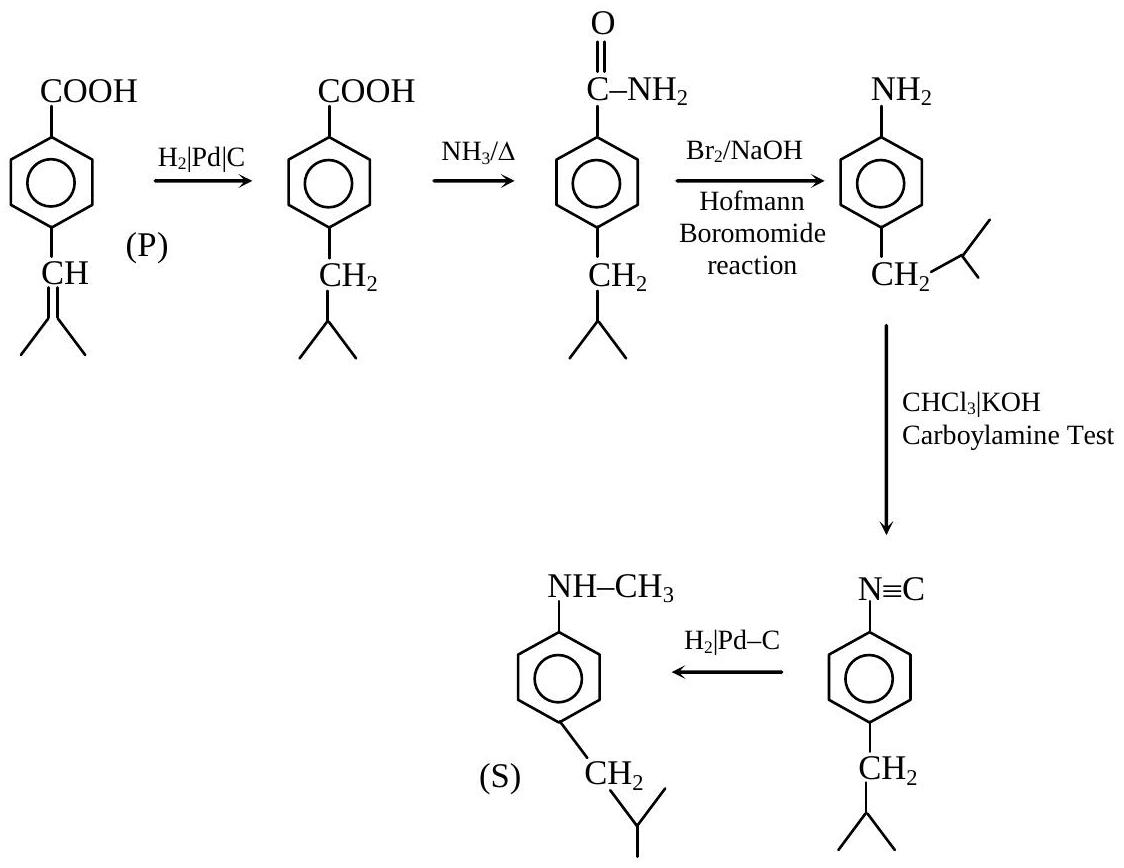
An organic acid P (C11H12O2) can easily be oxidized to a dibasic acid which reacts with ethyleneglycol to produce a polymer dacron. Upon ozonolysis, P gives an aliphatic ketone as one of the products. P undergoes the following reaction sequences to furnish R via Q. The compound P also undergoes another set of reactions to produce S.
An organic acid P(C11H12O2) can easily be oxidized to a dibasic acid which reacts with ethyleneglycol to produce a polymer dacron. Upon ozonolysis, P gives an aliphatic ketone as one of the products. P undergoes the following reaction sequences to furnish R via Q. The compound P also undergoes another set of reactions to produce S.
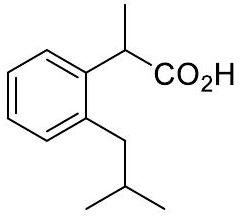
The compound R is
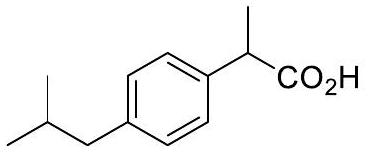
(A)(see structure)✓ Correct
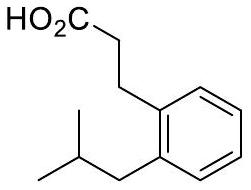
(B)(see structure)
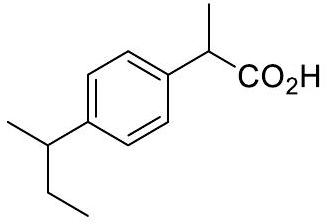
(C)(see structure)
(D)(see structure)
Answer: (A)
Solution
From the given information:
P (C11H12O2) oxidizes to a dibasic acid that forms Dacron (polyethylene terephthalate) with ethylene glycol → the dibasic acid is terephthalic acid.
Therefore, P is 4-isopropylbenzoic acid (p-isobutylbenzoic acid).
Ozonolysis gives an aliphatic ketone, confirming the isobutyl group.
The reaction sequence P → Q → R involves:
Reduction to alcohol (Q)
Oxidation or substitution to form R
Based on the structures, compound R is 4-isobutylphenylacetic acid (the carboxylic acid is on a side chain at the para position to the isobutyl group).
Correct answer: (A)
JEE Advanced · 2018 · 20 May 2018 · Paper 1 · Single correct option