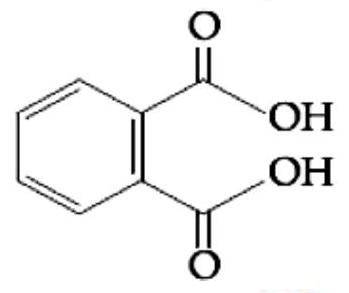
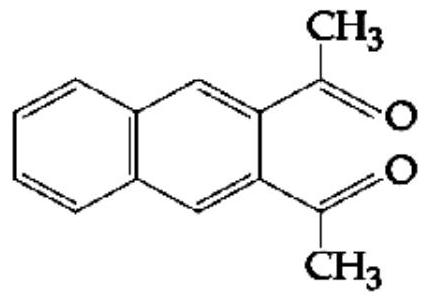
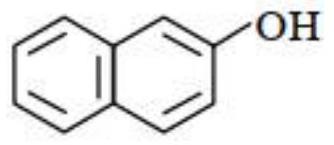
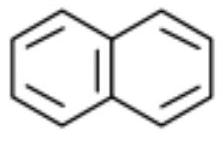
A solid's freezing point is set by how strongly its molecules hold onto one another: the stronger the intermolecular forces the higher the freezing point, so the weakest forces give the lowest freezing point. Among these structures the one that can hydrogen-bond extensively, the dicarboxylic acid, has the strongest attractions and the highest freezing point, whereas naphthalene is a nonpolar aromatic held together only by weak van der Waals dispersion forces. With the least attraction to overcome on melting, naphthalene has the lowest freezing point.
JEE Main · 2019 · 12 Jan 2019 · Shift 1 · Single correct option