JEE Main · 2021 · 25 Jul 2021 · Shift 1 · Compounds Containing Nitrogen

WhatsApp Email
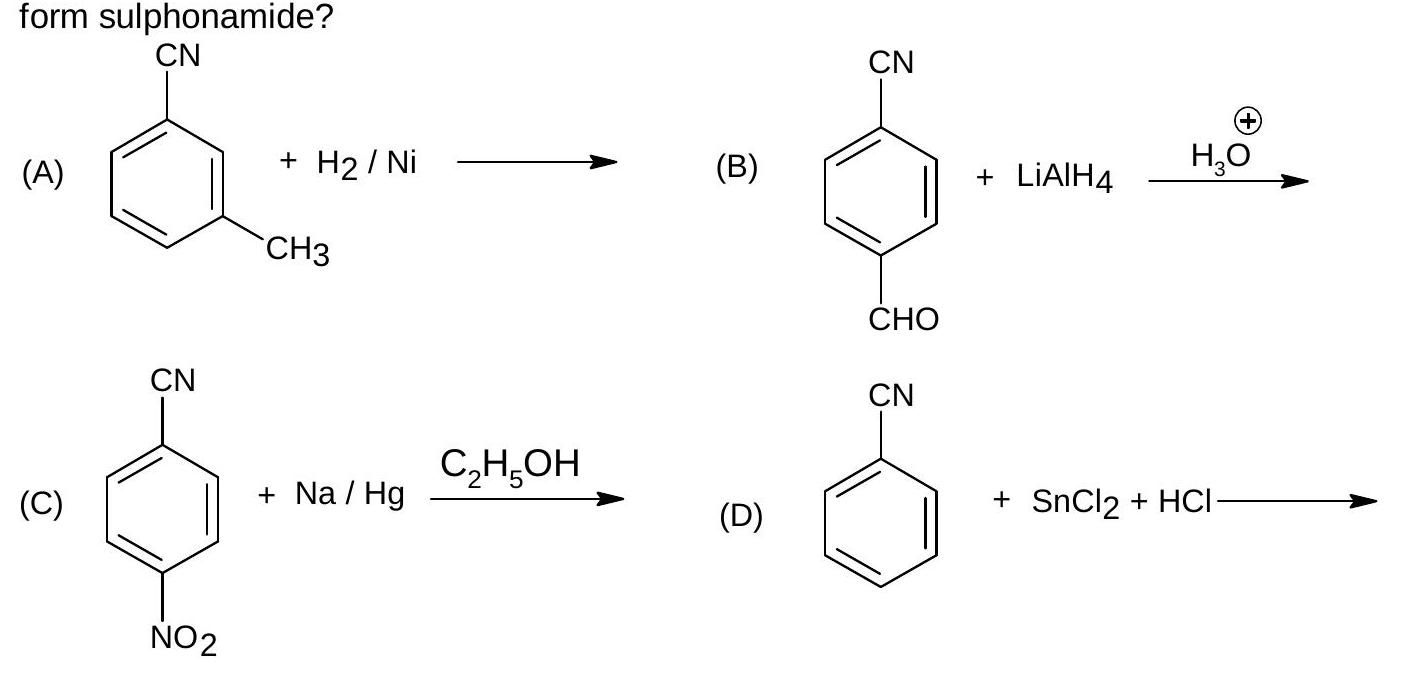
Which one of the products of the following reactions does not react with Hingberg reagent to form sulphonamide?
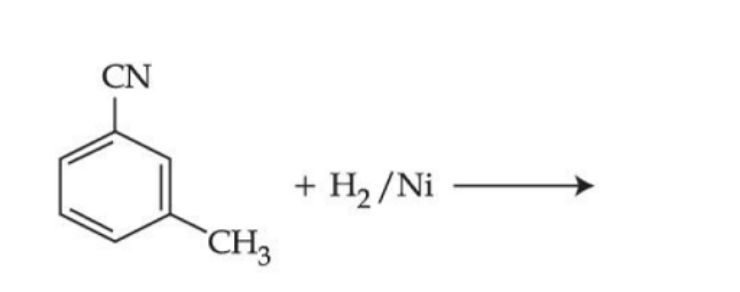
  1. (A)(see structure)
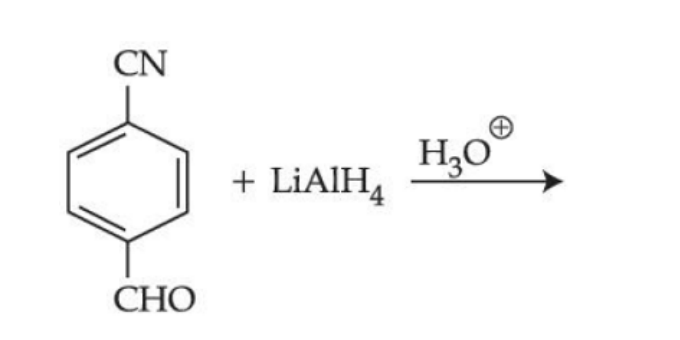
  2. (B)(see structure)
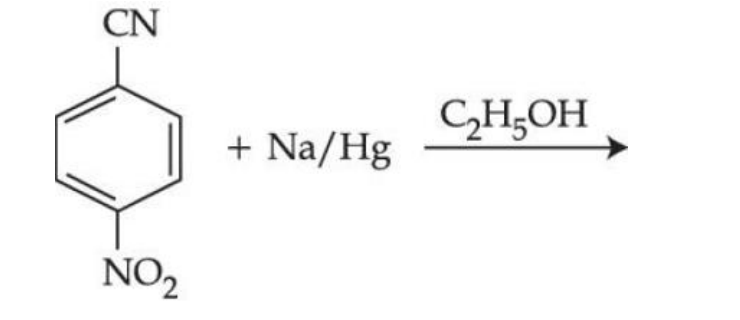
  3. (C)(see structure)
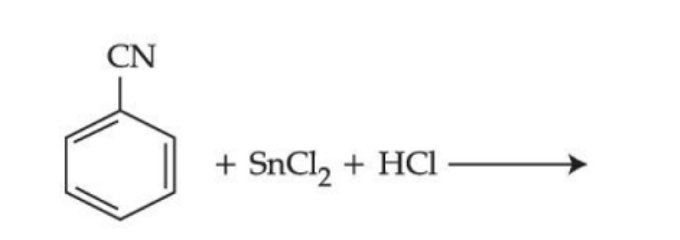
  4. (D)(see structure)
    ✓ Correct

Answer: (D)

Solution

Hinsberg's reagent, benzenesulphonyl chloride, can make a sulphonamide only with a nitrogen that still carries hydrogen, that is with a primary or a secondary amine. Hydrogen over nickel reduces 3-methylbenzonitrile to the primary amine 3-methylbenzylamine; lithium aluminium hydride reduces both functional groups of 4-formylbenzonitrile, giving a primary amine beside a primary alcohol; and sodium amalgam in ethanol likewise carries 4-nitrobenzonitrile through to an amine. Tin(II) chloride with hydrogen chloride, however, is the Stephen reduction, which halts at the aldimine, and hydrolysis of that intermediate gives benzaldehyde, a product with no nitrogen at all. The product that cannot form a sulphonamide is the benzaldehyde obtained from benzonitrile with tin(II) chloride and hydrogen chloride.

JEE Main · 2021 · 25 Jul 2021 · Shift 1 · Single correct option
More JEE Main questions on Compounds Containing Nitrogen

  1. A hydrocarbon 'P' on reaction with HCl gives an optically active compound 'Q' which on reaction with one mole of ammonia gives compound 'R' …
    JEE Main 2026View solution →
  2. An organic compound (P) on treatment with aqueous ammonia under hot condition forms compound (Q) which on heating with and KOH forms compound (R) having molecular formula . Names of and R …
    JEE Main 2026View solution →
  3. Consider the following reaction sequence

    The percentage of nitrogen in product 'T' formed is _____ %. (Nearest integer)

    (Given molar mass in H: 1, C: 12, N: 14, O: 16)
    JEE Main 2026View solution →
  4. 'A' is a neutral organic compound (M. F : ). On treatment with aqueous , 'A' forms a compound ' B ' which is soluble in dilute acid. ' B ' on treatment with aqueous …
    JEE Main 2026View solution →
  5. Consider the above sequence of reactions. The number of bromine atom(s) in the final product (P) will be:

    (1)
    (2)
    (3) pH neutralisation
    (4)
    (5) …
    JEE Main 2026View solution →
  6. The final product is :
    JEE Main 2026View solution →