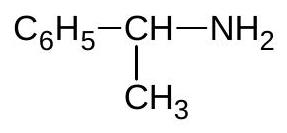
An organic compound "A" on treatment with benzene sulphonyl chloride gives compound B. B is soluble in dil. NaOH solution. Compound A is:
(A)C6H5−NHCH2CH3
(B)(see structure)✓ Correct
(C)C6H5−N−(CH3)2
(D)C6H5−CH2NHCH3
Answer: (B)
Solution
Benzene sulphonyl chloride reacts with primary and secondary amines but leaves tertiary amines untouched, since a tertiary nitrogen has no hydrogen to replace. A primary amine gives a sulphonamide that still carries one hydrogen on nitrogen, and the electron-withdrawing sulphonyl group makes that hydrogen acidic, so the product dissolves in dilute alkali as its sodium salt. A secondary amine gives a sulphonamide with no hydrogen left on nitrogen, which stays insoluble in alkali. A product soluble in dilute sodium hydroxide therefore comes from a primary amine, and the only primary amine among the structures offered is 1-phenylethanamine, C6H5CH(CH3)NH2.
JEE Main · 2021 · 18 Mar 2021 · Shift 2 · Single correct option