JEE Main · 2020 · 09 Jan 2020 · Shift 2 · Compounds Containing Nitrogen

WhatsApp Email
The decreasing order of basicity of the following amines is

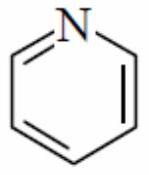
(I) (see structure)
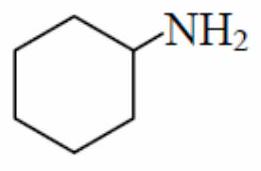
(II) (see structure)
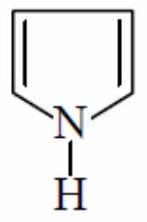
(III) (see structure)
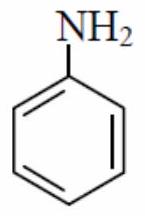
(IV) (see structure)
Structure I
I
Structure II
II
Structure III
III
Structure IV
IV
  1. (A)(III) (I) (II) (IV)
  2. (B)(II) (III) (IV) (I)
  3. (C)(I) (III) (IV) (II)
  4. (D)(III) (II) (I) (IV)✓ Correct

Answer: (D)

Solution

The basicity of each nitrogen is set by how freely its lone pair is offered to a proton. In cyclohexylamine the lone pair sits on an nitrogen with an electron-donating alkyl group and no delocalization, making it the most basic. In pyridine the lone pair lies in an orbital in the ring plane, outside the aromatic system, so it is available but held more tightly than in an aliphatic amine. In aniline the lone pair is drawn into the benzene ring by resonance, lowering its availability. In pyrrole the lone pair is part of the aromatic sextet itself, so offering it would destroy aromaticity, leaving it least basic. The decreasing order is cyclohexylamine pyridine aniline pyrrole.

JEE Main · 2020 · 09 Jan 2020 · Shift 2 · Single correct option
More JEE Main questions on Compounds Containing Nitrogen

  1. A hydrocarbon 'P' on reaction with HCl gives an optically active compound 'Q' which on reaction with one mole of ammonia gives compound 'R' …
    JEE Main 2026View solution →
  2. An organic compound (P) on treatment with aqueous ammonia under hot condition forms compound (Q) which on heating with and KOH forms compound (R) having molecular formula . Names of and R …
    JEE Main 2026View solution →
  3. Consider the following reaction sequence

    The percentage of nitrogen in product 'T' formed is _____ %. (Nearest integer)

    (Given molar mass in H: 1, C: 12, N: 14, O: 16)
    JEE Main 2026View solution →
  4. 'A' is a neutral organic compound (M. F : ). On treatment with aqueous , 'A' forms a compound ' B ' which is soluble in dilute acid. ' B ' on treatment with aqueous …
    JEE Main 2026View solution →
  5. Consider the above sequence of reactions. The number of bromine atom(s) in the final product (P) will be:

    (1)
    (2)
    (3) pH neutralisation
    (4)
    (5) …
    JEE Main 2026View solution →
  6. The final product is :
    JEE Main 2026View solution →