JEE Main · 2019 · 12 Jan 2019 · Shift 1 · Compounds Containing Nitrogen

WhatsApp Email
The increasing order of reactivity of the following compounds towards reaction with alkyl halide directly is:
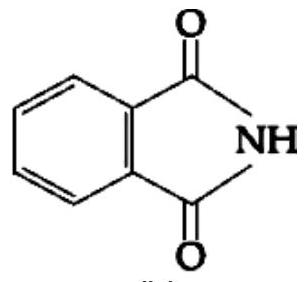
Structure a
a
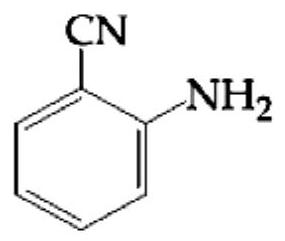
Structure b
b
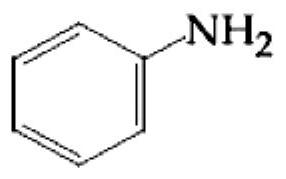
Structure c
c
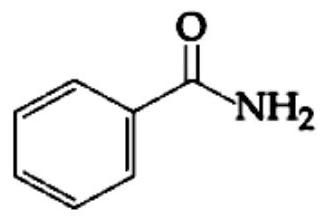
Structure d
d
  1. (A)(b) (a) (c) (d)✓ Correct
  2. (B)(a) (b) (c) (d)
  3. (C)(b) (a) (d) (c)
  4. (D)(a) (c) (d) (b)

Answer: (A)

Solution

Reaction with an alkyl halide is an -alkylation, so it runs faster when the nitrogen lone pair is more available to act as a nucleophile. In the imide the nitrogen lone pair is tied up by delocalisation into two flanking carbonyl groups, leaving it the least reactive. In the amide only one carbonyl pulls on the lone pair, so it is somewhat more available. The ring-substituted aniline bearing an electron-withdrawing group has its lone pair drawn in less than an amide's but still somewhat withdrawn, while the simple arylamine, whose lone pair is only partly delocalised into the ring, is the most nucleophilic and reacts fastest. The increasing order of reactivity is the imide, then the amide, then the cyano-substituted amine, then the simple amine.

JEE Main · 2019 · 12 Jan 2019 · Shift 1 · Single correct option
More JEE Main questions on Compounds Containing Nitrogen

  1. A hydrocarbon 'P' on reaction with HCl gives an optically active compound 'Q' which on reaction with one mole of ammonia gives compound 'R' …
    JEE Main 2026View solution →
  2. An organic compound (P) on treatment with aqueous ammonia under hot condition forms compound (Q) which on heating with and KOH forms compound (R) having molecular formula . Names of and R …
    JEE Main 2026View solution →
  3. Consider the following reaction sequence

    The percentage of nitrogen in product 'T' formed is _____ %. (Nearest integer)

    (Given molar mass in H: 1, C: 12, N: 14, O: 16)
    JEE Main 2026View solution →
  4. 'A' is a neutral organic compound (M. F : ). On treatment with aqueous , 'A' forms a compound ' B ' which is soluble in dilute acid. ' B ' on treatment with aqueous …
    JEE Main 2026View solution →
  5. Consider the above sequence of reactions. The number of bromine atom(s) in the final product (P) will be:

    (1)
    (2)
    (3) pH neutralisation
    (4)
    (5) …
    JEE Main 2026View solution →
  6. The final product is :
    JEE Main 2026View solution →