JEE Main · 2025 · 03 Apr 2025 · Shift 1 · Compounds Containing Nitrogen

WhatsApp Email
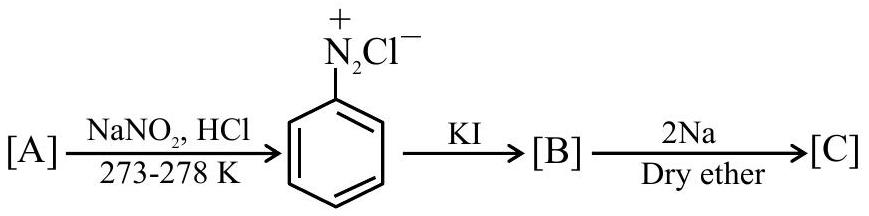
Identify [A], [B], and [C], respectively in the following reaction sequence :
  1. (A)(see structures)
    Structure A
    A
    Structure B
    B
    Structure C
    C
  2. (B)(see structures)
    Structure A
    A
    Structure B
    B
    Structure C
    C
  3. (C)(see structures)
    Structure A
    A
    Structure B
    B
    Structure C
    C
    ✓ Correct
  4. (D)(see structures)
    Structure A
    A
    Structure B
    B
    Structure C
    C

Answer: (C)

Solution

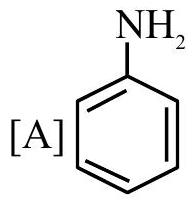
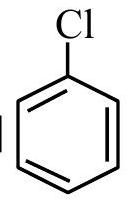
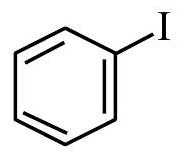
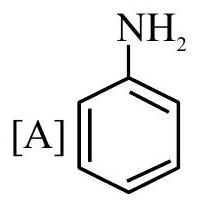
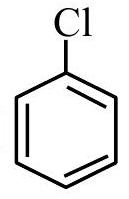
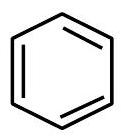
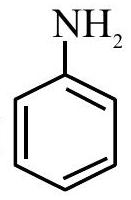
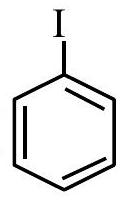
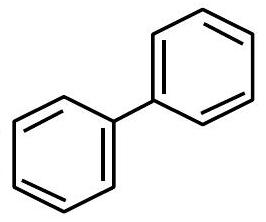
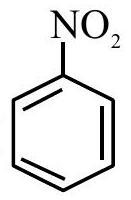
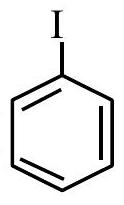
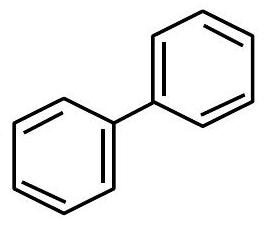
Treating [A] with and at -- K forms the benzenediazonium ion, so [A] is aniline. Warming the diazonium salt with potassium iodide replaces the diazonium group by iodine, giving iodobenzene as [B]. Iodobenzene with sodium in dry ether couples two aryl halides through the Fittig reaction, joining the rings as biphenyl, which is [C]. Thus [A], [B] and [C] are aniline, iodobenzene and biphenyl.

JEE Main · 2025 · 03 Apr 2025 · Shift 1 · Single correct option
More JEE Main questions on Compounds Containing Nitrogen

  1. A hydrocarbon 'P' on reaction with HCl gives an optically active compound 'Q' which on reaction with one mole of ammonia gives compound 'R' …
    JEE Main 2026View solution →
  2. An organic compound (P) on treatment with aqueous ammonia under hot condition forms compound (Q) which on heating with and KOH forms compound (R) having molecular formula . Names of and R …
    JEE Main 2026View solution →
  3. Consider the following reaction sequence

    The percentage of nitrogen in product 'T' formed is _____ %. (Nearest integer)

    (Given molar mass in H: 1, C: 12, N: 14, O: 16)
    JEE Main 2026View solution →
  4. 'A' is a neutral organic compound (M. F : ). On treatment with aqueous , 'A' forms a compound ' B ' which is soluble in dilute acid. ' B ' on treatment with aqueous …
    JEE Main 2026View solution →
  5. Consider the above sequence of reactions. The number of bromine atom(s) in the final product (P) will be:

    (1)
    (2)
    (3) pH neutralisation
    (4)
    (5) …
    JEE Main 2026View solution →
  6. The final product is :
    JEE Main 2026View solution →