JEE Main · 2025 · 04 Apr 2025 · Shift 2 · Compounds Containing Nitrogen

WhatsApp Email
The correct order of basicity for the following molecules is :
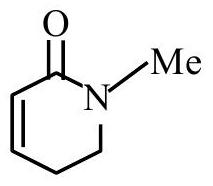
Structure P
P
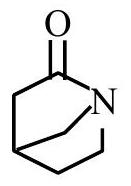
Structure Q
Q
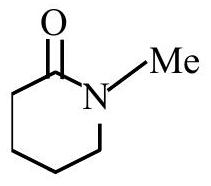
Structure R
R
  1. (A)P > Q > R
  2. (B)R > P > Q
  3. (C)Q > P > R
  4. (D)R > Q > P✓ Correct

Answer: (D)

Solution

Basicity here is set by how freely the nitrogen lone pair can be offered to a proton. In the saturated six-membered lactam the nitrogen lone pair is pulled into the adjoining carbonyl by amide resonance, leaving it least available. In the -unsaturated lactam the carboncarbon double bond also feeds electron density into that carbonyl, so the carbonyl draws less from nitrogen and the nitrogen retains more of its lone pair, making it more basic than the saturated lactam. In the bridgehead bicyclic lactam the rigid cage stops the nitrogen lone pair and the carbonyl from becoming coplanar, so amide resonance is switched off and the lone pair stays fully available, giving the highest basicity. The order of basicity is the bridgehead lactam greater than the unsaturated lactam greater than the saturated lactam.

JEE Main · 2025 · 04 Apr 2025 · Shift 2 · Single correct option
More JEE Main questions on Compounds Containing Nitrogen

  1. A hydrocarbon 'P' on reaction with HCl gives an optically active compound 'Q' which on reaction with one mole of ammonia gives compound 'R' …
    JEE Main 2026View solution →
  2. An organic compound (P) on treatment with aqueous ammonia under hot condition forms compound (Q) which on heating with and KOH forms compound (R) having molecular formula . Names of and R …
    JEE Main 2026View solution →
  3. Consider the following reaction sequence

    The percentage of nitrogen in product 'T' formed is _____ %. (Nearest integer)

    (Given molar mass in H: 1, C: 12, N: 14, O: 16)
    JEE Main 2026View solution →
  4. 'A' is a neutral organic compound (M. F : ). On treatment with aqueous , 'A' forms a compound ' B ' which is soluble in dilute acid. ' B ' on treatment with aqueous …
    JEE Main 2026View solution →
  5. Consider the above sequence of reactions. The number of bromine atom(s) in the final product (P) will be:

    (1)
    (2)
    (3) pH neutralisation
    (4)
    (5) …
    JEE Main 2026View solution →
  6. The final product is :
    JEE Main 2026View solution →