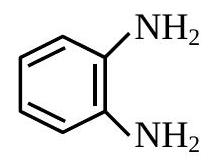
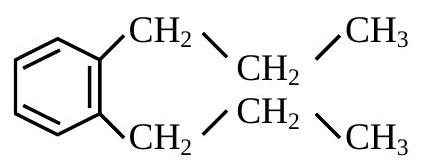
Statement I: (see structure) can be synthesized from (see structure) using simpler reagents in the order i) Acidic KMnO4, ii) Ammonia, iii) Bromine and alkali
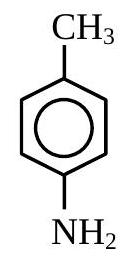
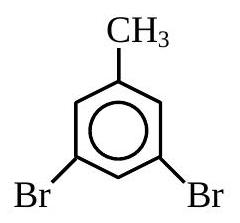
Statement II : (see structure) can be converted into (see structure) using reagents in the order (i)
Bromine- H2O (ii) NaNO2/HCl(0−5∘C) (iii) aq. H3PO2. In the light of the above statements, choose the correct answer from the options given belowABCD
(A)Both Statement I and Statement II are false
(B)Statement I is true but Statement II is false
(C)Both Statement I and Statement II are true✓ Correct
(D)Statement I is false but Statement II is true
Answer: (C)
Solution
In the first route, acidic KMnO4 oxidises both benzylic side chains of the ortho-dialkylbenzene to --COOH, giving phthalic acid; ammonia then furnishes the diamide, and Hofmann bromamide degradation with bromine and alkali converts each --CONH2 to --NH2, delivering benzene-1,2-diamine, so the first statement holds. In the second route, bromine water brominates p-toluidine at both positions ortho to the strongly activating --NH2 to give 2,6-dibromo-4-methylaniline, diazotisation at 0--5∘C forms the diazonium salt, and hypophosphorous acid removes the diazonium group to give 3,5-dibromotoluene, so the second statement also holds. Both statements are true.
JEE Main · 2026 · 23 Jan 2026 · Shift 2 · Single correct option