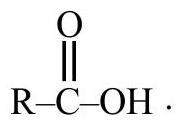
Statement I: The dipole moment of R-CN is greater than R−NC and R−NC can undergo hydrolysis under acidic medium to produce
(A)Both Statement I and Statement II are false
(B)Both Statement I and Statement II are true
(C)Statement I is true but Statement II is false
(D)Statement I is false but Statement II is true✓ Correct
Answer: (D)
Solution
Statement I asserts that R-CN has a larger dipole moment than R-NC and that R-NC on acidic hydrolysis gives a carboxylic acid. Both parts fail: the isocyanide R-NC actually has the larger dipole moment, and acidic hydrolysis of an isocyanide yields a primary amine with formic acid, R−NC+2H2OH+RNH2+HCOOH, not the carboxylic acid drawn, so Statement I is false. Statement II traces the conversion of R-CN to R-NC through RCOOH→RCOCl→RCONH2→RNH2→R−NC (hydrolysis, then the amide, Hofmann amine and carbylamine steps), a valid route, so Statement II is true. Statement I is false while Statement II is true.
JEE Main · 2026 · 24 Jan 2026 · Shift 2 · Single correct option